
Port Phillip Bay Snapper, a Land Based Guide
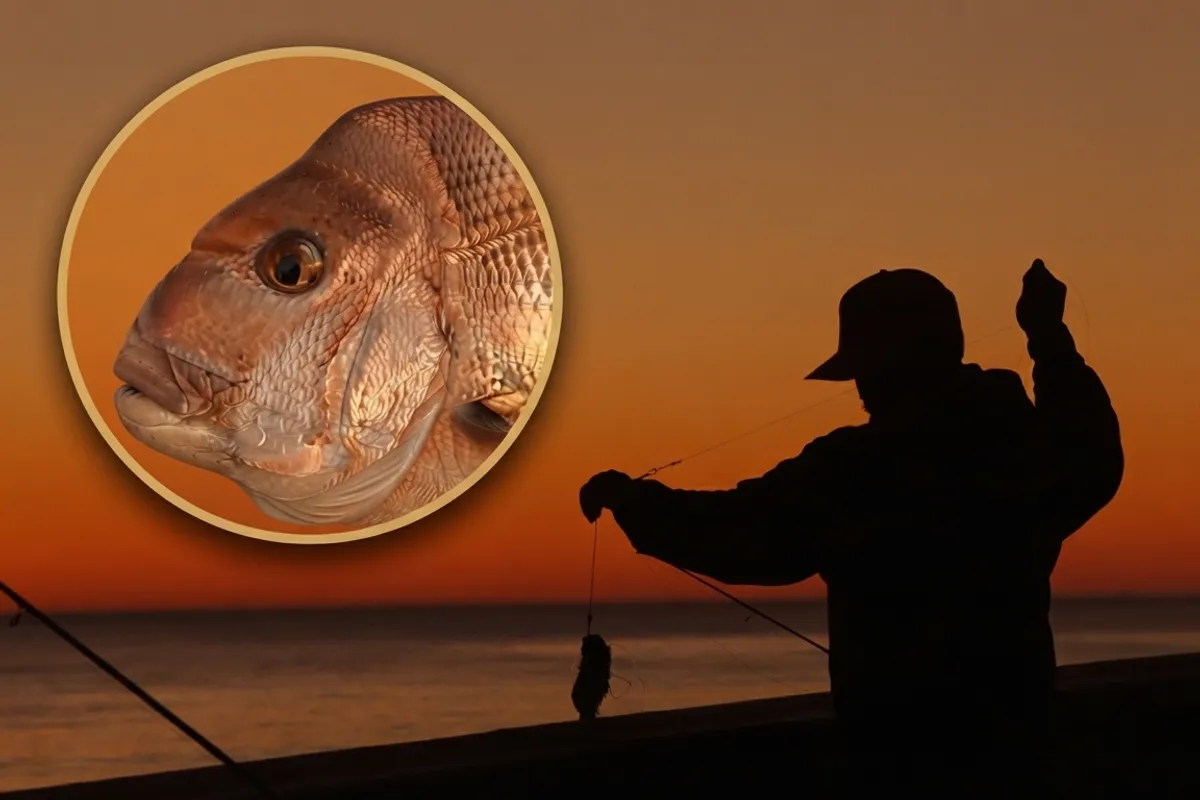
Snapper season in Victoria peaks from October to December, when adult snapper push in through the Heads and spread around Port Phillip Bay. For those few months, Port Phillip Bay snapper feed within reach of the piers, rocks and beaches around Melbourne. Pick the right weather and the right hour, and you can land a good red without a boat.
When Is Snapper Season in Victoria?
Victoria has no closed season for snapper, so you can fish for them all year. Anglers use "snapper season" to mean the spring run, when adult fish come into the bay to feed and spawn.
The Victorian Fisheries Authority tracked tagged snapper in Port Phillip Bay and most adults swam in through the Heads in October, as the bay warmed from 13 to 16°C. The fish peaked on the main grounds in November, with the water at 16 to 18°C. Once the bay reached 19°C, many of them left. For Melbourne anglers, snapper season follows the water temperature. A typical year from the shore runs like this.
| When | From the shore |
|---|---|
| September | A few early fish arrive through the Heads. Most shore anglers wait for October |
| October | The run starts. Mornington Pier and Mt Martha rocks, closest to the Heads, see fish first |
| November | The peak. Fish the piers and rock walls from Mordialloc to St Kilda at night and in rough westerlies |
| December | Still good. The shore from Elwood to Sandringham produces snapper up to Christmas |
| January to March | Most adults leave as the bay warms. Mordialloc Pier still fishes at night, and a summer storm can bring fish in close |
| April to May | The autumn run. From mid April the piers and rocks around Mornington and Mt Martha give you a shot at a big red |
Melbourne tradition starts the season the weekend after the AFL grand final. The early fish are there, but there are fewer of them and they're harder to catch. Go hard once the bay hits 16°C and the local reports pick up.
You can still catch snapper in winter. Pinkies live in the bay all year around the shallow reefs, seagrass and man made structures, and fish up to 3kg hang around those same spots from May to August.
Following the Port Phillip Bay Snapper Run
The first fish turn up around Lonsdale Bight. From there they push along the eastern shore past Mt Martha and Mornington, then through the middle of the bay and up towards the city. That's why the southern piers and rocks see fish first.
Adult snapper keep moving through the run. The VFA tracking showed they spent a day or less near any one spot, often swam 10 kilometres in a day, and some crossed the whole bay in 24 hours. That suits a land based angler. You can't chase the fish, but you can sit on a good spot through a tide change and wait for a school to come past. Treat a hot report from the south of the bay as a sign the run has started, because those fish can be 10 kilometres away by the next morning.
In November the adults gather to spawn, with Carrum Bight the main ground. Most of that happens out in the open bay, away from the piers, so from the shore you're waiting for a strong wind to push fish in close.
Pinkies, Reds and Big Knobby Snapper
Snapper are deep bodied fish, pink to silver or a dark red depending on where they've been living, with bright blue spots along the body. Young fish show the most blue. Early season fish fresh in from the ocean often carry electric blue highlights too.
Anglers call snapper under about 2kg pinkies. Above that they're reds, or plain snapper. Big old fish grow a hump on the forehead and get called knobbies. Victorian snapper can pass a metre and 10kg, and they can live for more than 40 years, but most fish you catch from the shore sit between half a kilo and 7kg.
Weather for Land Based Snapper
Snapper come in close in rough weather. A strong westerly or south westerly pushes baitfish against the eastern side of the bay and stirs up the water, and the snapper follow the bait in, sometimes into a few metres of water. Plan around a westerly that lines up with a tide change at dawn or dusk.
- Low light. Have your bait in the water before first light. The dawn bite can switch off within half an hour of sunrise. Dusk and the first hours of dark are the other prime window, and the bigger fish feed with more confidence at night.
- The tide change. Fish the two hours either side of the change. The last two hours of the run in tide often fishes best.
- Wind direction. A strong northerly tends to shut the bite down on the eastern side. Anglers argue about easterlies, which suit the western side of the bay, where the wind sits behind you.
- Murky water after rain. Heavy rain in the city sends brown stormwater out of the drains along the northern and eastern shores. Fish somewhere else until it clears.
Where to Catch Snapper in Port Phillip Bay From the Shore
Eastern side
Most land based snapper fishing in Melbourne happens on the eastern shore, where the westerlies push the fish in.
- Mornington Pier. The best known land based snapper spot in the bay. Deep water and reef sit close by, and it gets the run early because it's closer to the Heads.
- Mt Martha rocks. Deeper water within a cast, and fish close to 9kg have come off these rocks. Watch your footing and fish them lower on the tide.
- Safety Beach. A cast here reaches 3 to 4 metres of water, deeper than most bay beaches.
- Mordialloc Pier. Deeper water at the end and good night fishing, from October to April. The beach either side of the pier also produces snapper on an evening run in tide.
- Beaumaris. Reef ground that holds pinkies and the odd bigger fish.
- Sandringham breakwater. Walk halfway along the wall around the yacht club at Picnic Point and cast a paternoster rig with a 1 oz sinker or heavier. It fishes best in a south westerly.
- Brighton breakwater and St Kilda Pier. Both close to the city. Brighton fishes best in a rough westerly, and the St Kilda breakwater gives you deeper water with more tide flow. The shore from Elwood to Sandringham produces good snapper from November to Christmas, around sunrise and sunset.
Western side
- The Warmies, Newport. A channel at the mouth of the Yarra where the Newport Power Station lets out warm water. The station only runs when power demand is high, so look for smoke from the stack. That means warm water is flowing and the fish are drawn in. Pinkies and salmon are the usual catch, and the odd big snapper turns up, mostly in spring and summer. The bottom is snaggy, so bring spare rigs.
- Altona Pier. An artificial reef off the end holds baitfish, and snapper follow them in the warmer months. Fish the run in tide when the water's clean. The broken ground off Altona also fishes well after a strong onshore blow.
- St Leonards Pier. On the Bellarine Peninsula, and worth a go for snapper after a strong northerly.
Victorian Snapper Rules
Know the rules before you go snapper fishing in Port Phillip Bay. The Victorian Fisheries Authority last updated them in May 2026.
| Rule | Limit |
|---|---|
| Minimum size | 28cm |
| Bag limit | 10 per person per day |
| Big fish | No more than 3 of your 10 can be 40cm or longer |
| Measuring | Measure from the tip of the snout, with the mouth closed, to the end of the tail. Check the size straight away and release undersize fish |
| Filleting | You can't fillet snapper on or in Victorian waters. Keep them whole until you're off the water. The cleaning tables at the boat ramp are fine |
| Licence | You need a Victorian recreational fishing licence unless you're exempt |
You can't fish in marine national parks or marine sanctuaries. In Port Phillip Bay that rules out Port Phillip Heads Marine National Park (Point Lonsdale, Point Nepean, Portsea Hole, Pope's Eye, Mud Islands and Swan Bay), plus the Point Cooke, Jawbone and Ricketts Point sanctuaries. The VFA map shows each boundary.
The Best Rig for Land Based Snapper
Two rigs cover most land based snapper fishing in the bay.
The running sinker rig. A ball sinker runs down the line onto a swivel, with a 1 to 1.5 metre leader to two snelled hooks. A snapper can pick up the bait and swim off without feeling the weight. Port Phillip Bay has gentle current, and bay regulars use this rig more than any other.
The paternoster rig. The sinker sits on the bottom with the hooks on droppers above it. It holds better in current and keeps your bait up out of the weed. Tackle shops sell them pre tied, and a pre made paternoster with a 1 oz star sinker is an easy start off a rock wall.
Sinker. A 1 to 2 oz sinker holds bottom in most of the bay and still casts a whole pilchard a long way.
Leader. Tie 30 to 40 lb mono or fluorocarbon. Snapper have sharp teeth and can bite through lighter leader, and pier pylons and rocks chafe it. Fluorocarbon is harder to see in clear water.
Hooks. Two snelled octopus hooks in 4/0 or 5/0 cover most fish, and a finer gauge hook sets better in a snapper's hard mouth. If you plan to release fish, swap to a single 4/0 to 6/0 circle hook. Drop to 2/0 when the pinkies are about.
Our surf fishing rigs guide shows how to tie both rigs, step by step.
Gear for Land Based Snapper
Shore fishing needs longer, stronger gear than a boat. You have to cast further, and you have to stop a big fish before it reaches the pylons or the rocks.
Rod. A 9 to 12 foot rod rated around 6 to 8kg suits most land based snapper fishing around Melbourne. A 9 footer is easier to handle, throws a 2 oz sinker and a whole pilchard a long way, and doubles as a soft plastic rod. A 12 footer casts further for a bait you leave sitting in a rod holder. Step up to an 8 to 12kg rod for heavier sinkers or rough rock walls.
Reel. A 4000 to 6000 size spin reel. A bait runner reel, with a free spool you can switch on, lets a snapper swim off with the bait before it feels the drag.
Line. 15 to 20 lb braid casts further and you feel more of the bite. Run it with a leader, because braid has no stretch and a snapper's head shakes can tear the hooks out. Plenty of pier regulars stick with 20 to 30 lb mono, which stretches and forgives a mistake when a big red lunges near the pier.
Bait and Berley
Fresh bait out-fishes frozen by a long way.
- Pilchards. The most popular snapper bait in the bay. They're oily and leave a scent trail, but they're soft. Wrap them with bait elastic so they stay on the hook through the cast.
- Squid and calamari. Squid strips and rings stay on the hook when pinkies and flathead start picking at your baits. Some bay regulars use squid and cuttlefish for most of their snapper fishing.
- Silver whiting. Tougher than pilchards and another good answer to the pickers.
- Fish chunks. A cutlet of salmon, pike, garfish or slimy mackerel, skin and scales on, holds together in current and leaks plenty of oil.
Berley. Hang an onion bag of berley pellets off the pier, or mix chopped pilchard with pellets in a bucket and feed it in a little at a time to hold the fish in front of you. Go easy on the pellets. They swell in a fish's stomach and fill it up.
Soft Plastics From the Shore
Bait catches most land based snapper, but soft plastics work from the piers too, and they let you cover more water. Rig a 4 to 5 inch paddle tail or curl tail on a 1/4 to 1/2 oz jig head. Cast it out, let it sink to the bottom and work it back with slow hops. Motor oil, pearl white and natural prawn colours all catch fish in the bay. Your 9 foot rod handles this fine.
Hooking and Landing a Snapper
Let it run. With circle hooks, don't strike. Let the snapper take the bait and swim off, and the hook rolls into the corner of its jaw. Pin the bait through one end and leave plenty of hook point showing. A bait runner reel helps, because the fish can run without feeling the rod.
Bring a long net or gaff. You can't lift a big snapper up a pier or a rock wall by the line. The hooks pull or the leader snaps. Take a long handled landing net or a pier gaff, and use the net if you plan to release the fish.
Watch the rod tips. If the tip keeps nodding without buckling over, pickers are stripping your bait. Wind in and check it.
Getting Your Bait Out Past the Shallows
Many Port Phillip Bay beaches are shallow, so even a long cast can fall short of the deeper water and structure where snapper feed. On the best snapper days the westerly that brings them in also blows back into your face as you cast.
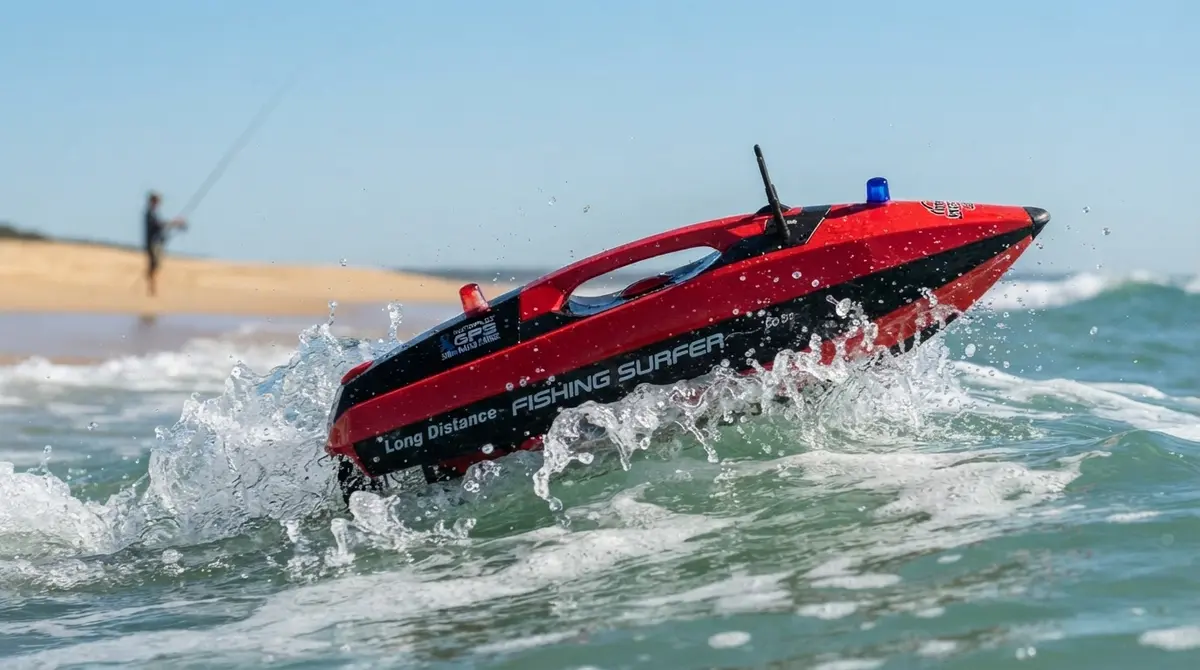
A saltwater bait boat gets around both problems. You drive the bait out and drop it on the spot you pick.
- Reach deeper water. The Fishing Surfer has a range of up to 500 metres, so you can drop a bait well past casting distance.
- Keep soft baits whole. A pilchard often flies off the hook on a hard cast. Carried out on the boat, it reaches the bottom in one piece.
- Head into the wind. Twin brushless motors push the boat through wind chop and waves up to a metre.
- Find structure. A bait boat with a fish finder, like the Fishing Surfer V2 + Fish Finder, shows you the bottom, any structure and the fish on it from the shore, the way a boat angler sounds for snapper.
- Save your fishing spot. The Fishing Surfer is a GPS bait boat with four memory buttons. Save a spot where the snapper are biting, and it drives itself back there on every drop, day or night. Its LED lights let you follow it after dark.
Use the boat from beaches and rocks. Leave it at home on a crowded pier, and keep it clear of swimmers and anchored boats. Victoria doesn't list bait boats as banned fishing gear, and you can fish up to four lines in marine waters. Our guide to whether bait boats are legal in Australia has the detail.
Put Your Bait Where the Snapper Feed
The Fishing Surfer carries your bait past the shallows to deeper water and structure you can't cast to, up to 500 metres out.
Frequently Asked Questions
When is snapper season in Victoria?
Victoria has no closed season for snapper. The main run comes in spring. Most adults arrive in Port Phillip Bay in October, the peak comes in November, and October to December is the best time for land based anglers.
When is snapper season in Melbourne?
In Port Phillip Bay the run peaks from October to December. The bite slows in January once the bay passes 19°C, and land based anglers get a second chance in autumn, from around mid April.
Can you catch snapper land based in Port Phillip Bay?
Yes. Mornington Pier, Mt Martha rocks, Mordialloc Pier and the Brighton and Sandringham breakwaters are the most reliable spots. Fish them in a westerly or south westerly, around dawn, dusk or after dark.
Where is the best place to catch snapper in Victoria from the shore?
In Port Phillip Bay, Mornington Pier and Mt Martha rocks on the eastern side are the best known. Western Port, Ninety Mile Beach and the Portland breakwall also produce land based snapper.
What is the snapper bag limit in Victoria?
10 snapper per person per day, with a minimum size of 28cm. No more than 3 of those 10 can be 40cm or longer.
What is a pinkie snapper?
A pinkie is a young snapper, under about 2kg. Pinkies live in Port Phillip Bay all year around shallow reefs and seagrass, and they're a common catch from the piers. A pinkie still has to reach 28cm before you can keep it.
Can you catch snapper in Port Phillip Bay in winter?
Yes. Pinkies and fish up to about 3kg stay around the shallow reefs, seagrass and man made structures from May to August.
What is the best bait for snapper in Port Phillip Bay?
Fresh pilchards and fresh squid. Fresh bait out-fishes frozen by a long way, and squid stays on the hook longer when small fish pick at it.
Can I use a bait boat in Port Phillip Bay?
Yes. Victoria doesn't list bait boats as banned fishing gear. Keep clear of swimmers and other boats, and stay out of marine national parks and sanctuaries.