
Surf Fishing Rigs That Catch Fish
Walk into any tackle shop near the coast and you'll see a wall of pre-made surf rigs. Most of them are some version of six rigs that Australian beach anglers have relied on for decades. Learn those six and you can tie the right one for almost any fish on the beach, for a fraction of the price.
This guide covers each rig, how to tie it, which fish it suits, and where on the beach to put it. If you haven't read the beach yet, start with our guide on how to read a surf beach. The best rig in the world won't catch fish in empty water.
The Gear Behind Every Rig
A rig is only as good as the outfit it's tied to. For most surf fishing around Australia, this setup covers you.
- Rod. 10 to 12 feet. A long rod casts further and holds your line up over the shore break, so the waves don't drag your rig around.
- Reel. A 4000 to 6000 size spinning reel handles whiting, bream, salmon and tailor. Step up to 8000 or bigger for snapper, mulloway and sharks.
- Shock leader. A length of heavier mono tied to the end of your mainline, long enough to go a few turns around the reel and run the length of the rod. The rule of thumb is about 10 lb of leader for every ounce of sinker. It takes the strain of a hard cast so a snapped line doesn't send your sinker flying down the beach.
- Sinkers. Ball and bean sinkers roll with the water, which suits a calm gutter where you want the bait to move a little. Star and spike sinkers grip the sand when there's sweep running. Start with 1 to 3 oz in calm water and 4 to 6 oz in sweep, and always use the lightest one that holds.
Mono or Braid?
Both catch fish, and plenty of good surf anglers use each. It comes down to how you fish.
- Stretches a little, which cushions the hook when a fish shakes its head or surges in the waves, so the hook is less likely to tear out
- Stands up well to rubbing on sand and shells
- Cheaper to fill a big surf spool
- Knots are simple to tie and hold well
- Tangles are easy to pick apart
- Fewer wind knots on a breezy beach
- Thinner and slicker for the same strength, so it slides off the spool and through the rod guides with less drag and casts further
- Thin line catches less sweep, so a lighter sinker holds
- Almost no stretch, so you feel every bite and set hooks at distance
- Lasts for years without going stiff or weak
- Needs a mono leader, because sand cuts it quickly
If you're starting out, mono is the easier line to learn on. If you fish deep gutters with a lot of sweep, or you want every extra metre of casting distance, braid is worth the switch.
1. The Paternoster Rig
The paternoster is the classic Australian beach rig and the one to learn first. The sinker sits at the very bottom and the hooks hang off short droppers above it, so your baits sit just off the sand where fish find them and crabs don't.
How to tie it
- Cut about 1.2 metres of 30 to 40 lb mono for the rig body.
- Tie a swivel to the top end. Your mainline or shock leader ties to the other side of it.
- Tie two dropper loops, about 40 cm apart.
- Tie a loop or sinker clip at the bottom for the sinker.
- Tie a hook to each dropper loop.
Hooks. Size 4 to 1 long shank for whiting, 1/0 to 3/0 for bream, dart and salmon.
Baits. Beach worms, pipis, prawns and squid strips.
Where to cast it. The edge of the gutter, where the first sandbank drops into deeper water. Whiting and bream feed right along that edge, often closer than you'd think.
2. The Running Sinker Rig
Big, wary fish like snapper and mulloway often drop a bait the moment they feel weight. On a running sinker rig the line slides freely through the sinker, so a fish can pick up the bait and swim off without feeling a thing.
How to tie it
- Thread a sinker slide onto your mainline and clip a spike sinker to it. A plain ball sinker works too, but it rolls in the surf.
- Thread on a bead. It protects the knot from the sinker.
- Tie the mainline to a swivel.
- Tie 1 to 2 metres of leader to the other side of the swivel.
- Tie a circle hook to the end of the leader.
Hooks. A single 4/0 to 8/0 circle hook.
Baits. Fresh squid, fish fillets, pilchards and mullet.
Where to cast it. The deepest water you can reach, on the edge of a hole or the back of the gutter. Night and the hours after a big swell are best for bigger fish.
3. The Ganged Pilchard Rig
Tailor and salmon hit a bait hard and fast, and a single hook often misses them. A gang of linked hooks runs the full length of a pilchard, so wherever a fish grabs it there's a hook waiting.
Strictly speaking it's the running sinker rig above with a set of gang hooks in place of a single hook. Most surf anglers call it a rig of its own because it's baited and fished so differently.
How to tie it
- Buy pre-made gangs, or link your own by passing the point of one hook through the eye of the next and closing the eye with pliers.
- Thread a ball sinker onto your mainline so it runs freely down to the swivel.
- Tie the mainline to a swivel.
- Tie 30 to 50 cm of light wire or 40 lb mono to the other side of the swivel, then to the top hook. Tailor teeth cut light line.
- Push the top hook through the pilchard's eyes, then put each hook in turn through the body so the points all come out on the same side.
- Wrap a few turns of bait elastic around the bait to hold it together on the cast.
Hooks. 3/0 to 5/0 gangs, matched to the length of the bait.
Baits. Whole pilchards, garfish and small mullet.
Where to cast it. Into the cut or along the edge of the second sandbank, at dawn and dusk when tailor and salmon run. Cast smoothly so the pilchard stays on.
4. The Two Hook Snapper Rig
Long baits like squid strips and fish fillets spin in the current on a single hook, and a fish that grabs the tail end gets a free feed. Two hooks on the same leader hold the bait straight and put a hook at both ends.
How to tie it
- Tie the bottom hook to the end of your leader with a snell knot.
- Slide the second hook onto the leader and snell it loosely above the first, so it can slide.
- Set the gap between the hooks to the length of your bait, then pull the top snell tight.
- Tie the leader to a swivel, and run it as a paternoster or on a running sinker.
Hooks. 4/0 to 6/0 octopus or circle hooks.
Baits. Squid strips, whole squid, fish fillets and pilchards.
Where to cast it. The gutter or the edge of a hole, especially at night or in dirty water after a swell. Wrap soft baits with bait elastic so they survive the cast.
5. The Float Rig
Not every fish feeds on the bottom. Tailor, salmon, kingfish and tuna hunt higher in the water, and a bait hanging under a float puts it right where they're looking.
How to tie it
- Thread a running float onto your mainline, or tie a balloon on with a light overhand knot so it pops free when a fish takes.
- Tie a swivel below it at the depth you want to fish, usually 1 to 3 metres.
- Tie a short leader and a single hook, or a gang for whole fish.
- Hook a live bait lightly through the back or the nose so it swims freely, and do it just before you cast.
Hooks. A single 4/0 to 7/0 hook.
Baits. Live yakka, slimy mackerel or mullet, or a whole dead pilchard.
Where to fish it. Cast it along the gutter or into the cut for tailor and salmon. The old school way to get further out is to let a balloon drift out the back on an offshore wind.
6. The Shark Rig
Sharks have teeth that cut mono and skin rough enough to wear through it, so a shark rig has two lines of defence. A long, heavy leader takes the rubbing from the body and tail, and a wire trace stops the teeth.
How to tie it
- Join 3 to 5 metres of 150 to 200 lb mono to your braid as a wind on leader.
- Thread a sliding sinker clip onto the leader and clip on an 8 to 12 oz spike sinker.
- Tie the leader to a heavy swivel.
- Crimp 1.5 to 2 metres of multi strand wire to the swivel.
- Crimp a 10/0 to 14/0 circle hook to the end of the wire.
Baits. Fresh mullet, tuna, bonito, eel chunks, cubed ray and tailor fillets, kept cold.
Where to fish it. A deep gutter at night, when sharks come in close, or out the back of the break. Check your state's rules first. Great white sharks and grey nurse sharks are protected, and several other species have limits. Never fish for sharks near swimmers. For everything else a beginner needs, from baits to a safe release, see our guide to shark fishing from the beach.
Rigging for Gummy Sharks
Gummy sharks are one of the most sought after fish off southern beaches, and some of the best eating in the sea. You don't need a heavy shark rig for them. The running sinker rig does the job with a few changes.
- Leader. 60 to 80 lb mono. Gummies crush their food with flat teeth, so there's no need for wire.
- Hook. A 4/0 to 6/0 circle hook.
- Bait. Fresh squid, or oily fish fillets like salmon and mullet.
- When and where. At night, in deep gutters and out the back of the break, on southern beaches, especially in Victoria, South Australia and Tasmania.
Which Rig for Which Fish
A quick reference for the beach. The places are the beach features from our surf beach guide.
| Fish | Where | Rig and bait | Hook |
|---|---|---|---|
| Whiting | Gutter | PaternosterWorms, pipis | 4 to 1 long shank |
| Bream | Gutter, cut | PaternosterPrawns, pipis | 1/0 to 2/0 |
| Dart | Gutter | PaternosterPipis, prawns | 1/0 to 2/0 |
| Flathead | Gutter edge | Paternoster or gangedPilchards, prawns | 2/0 to 4/0 |
| Tailor | Cut, second sandbank | Ganged or floatPilchards, garfish | 3/0 to 5/0 gang |
| Salmon | Gutter to back of the break | Ganged or paternosterPilchards, squid | 2/0 to 4/0 |
| Snapper | Back of the break | Running sinker or two hookSquid, fillets | 4/0 to 6/0 |
| Mulloway | Back of the break | Running sinkerFresh squid, mullet | 6/0 to 8/0 |
| Kingfish | Back of the break | FloatLive yakka, slimies | 5/0 to 7/0 |
| Gummy shark | Gutter to back of the break | Running sinkerSquid, fresh fillets | 4/0 to 6/0 circle |
| Big sharks | Back of the break | Shark rigMullet, tuna, eel, ray | 10/0 to 14/0 circle |
Common Rig Mistakes
- Too much sinker. If your rig holds without budging, try the next size down. Lighter rigs look more natural and get more bites.
- Hooks too big. Smaller fish pick the bait off around the hook without ever getting hooked. Size down until you start hooking them.
- Fishing the top of the sandbank. Shallow sand holds few fish. Cast to its edges.
- Leaving the bait out too long. After half an hour in the water a bait has lost most of its scent. Check and change it every 15 to 20 minutes.
- Striking a circle hook. Let the fish load the rod and wind steadily. The hook sets itself in the corner of the mouth.
Take the Rigs to the Beach
Get every rig in this guide as a free phone sized PDF, with the diagrams, hook sizes, baits and the which rig for which fish chart. Save it to your phone and check it on the sand.
Your Six Surf Rigs guide is on its way. If it isn't there in a few minutes, check your spam or promotions folder.
When the Fish Are Past Casting Range
A good cast lands about 60 metres out, which puts you in the gutter. That's fine for whiting, bream and salmon. But snapper, kingfish and sharks often feed further out, at the back of the break past the second sandbank, where no cast reaches.
That's why more and more Australian surf anglers use a bait boat. Every rig in this guide can be dropped up to 500 metres out, and a few things get easier along the way.
- Soft baits arrive whole. With no cast, pilchards and fish fillets don't fly off the hook.
- Bigger baits. A whole mullet or a slab of tuna is no harder to send out than a prawn.
- The exact spot. Mark a hole on GPS and every bait lands in the same place, even at night.
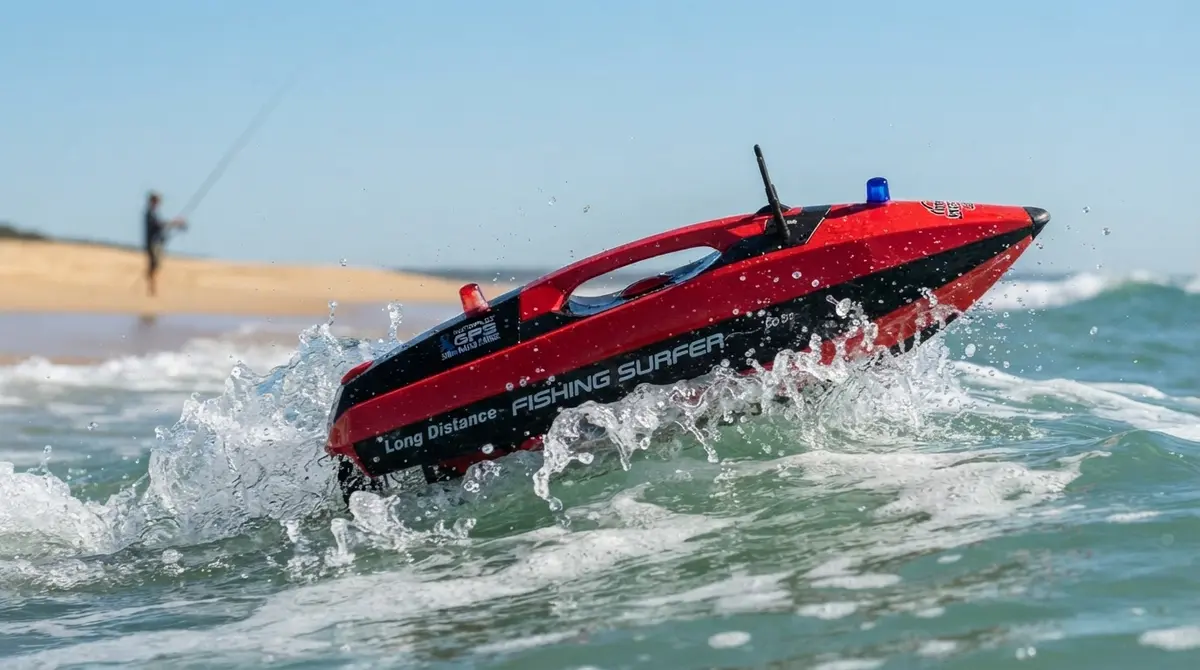
On the Fishing Surfer, your line clips into the rear release and the bait goes in the hopper. Drive out through the cut, release it from the remote, and the boat comes home on GPS. Then wind up the slack and fish the rig as normal.
Reach the Fish Past the Break
The Fishing Surfer carries your rig through the surf and drops it on the structure that holds the biggest fish, up to 500 metres out.
Frequently Asked Questions
What is the best all round surf fishing rig?
The paternoster. It suits whiting, bream, dart, salmon and flathead, it's easy to tie, and it keeps your bait just off the sand where fish feed. If you only learn one rig, learn this one.
What size sinker do I need for surf fishing?
Use the lightest sinker that holds the bottom. That's usually 1 to 3 oz in a calm gutter and 4 to 6 oz when there's sweep running. Star and spike sinkers grip the sand better than ball sinkers.
Should I use braid or mono for surf fishing?
Both work. Mono stretches, which helps keep hooks in during the fight, and it's cheaper and easier to handle. Braid casts further, cuts through sweep and lets you feel bites at distance, but it needs a mono leader because sand cuts it.
What rig should I use for gummy sharks?
A running sinker rig with a 4/0 to 6/0 circle hook on a 60 to 80 lb mono leader. Gummies crush their food with flat teeth, so you don't need wire. Fish it at night with fresh squid or oily fish fillets.
What hook size is best for beach whiting?
Size 4 to 1 long shank hooks. Whiting have small mouths, and a long shank makes the hook easier to remove. Use beach worms or pipis on a paternoster rig.